
Helpful Information
Selling a Right Hand Drive Car in Spain
Why are right hand drive cars worth less than left hand drive cars in Spain? And why are Spanish cars so much more expensive than UK cars?
If you're a British expat living in Spain, you've probably noticed something interesting about the Spanish used car market.
A vehicle that might sell for £3,000 in the UK could be advertised for considerably more in Spain.
However, there's an important difference between left hand drive and right hand drive vehicles.
Even when two cars are the same make, model, year and mileage, their market values can be very different depending on which side the steering wheel is on.
At We Buy Your Spanish Car, we regularly buy both right hand drive and left hand drive vehicles throughout the Costa Blanca and surrounding areas.
We understand the specialist market for British-style vehicles in Spain and aim to offer fair, realistic valuations based on actual demand.
This guide explains why these price differences exist and what they mean when you're selling your car.
RHD vs LHD: What's the Difference?
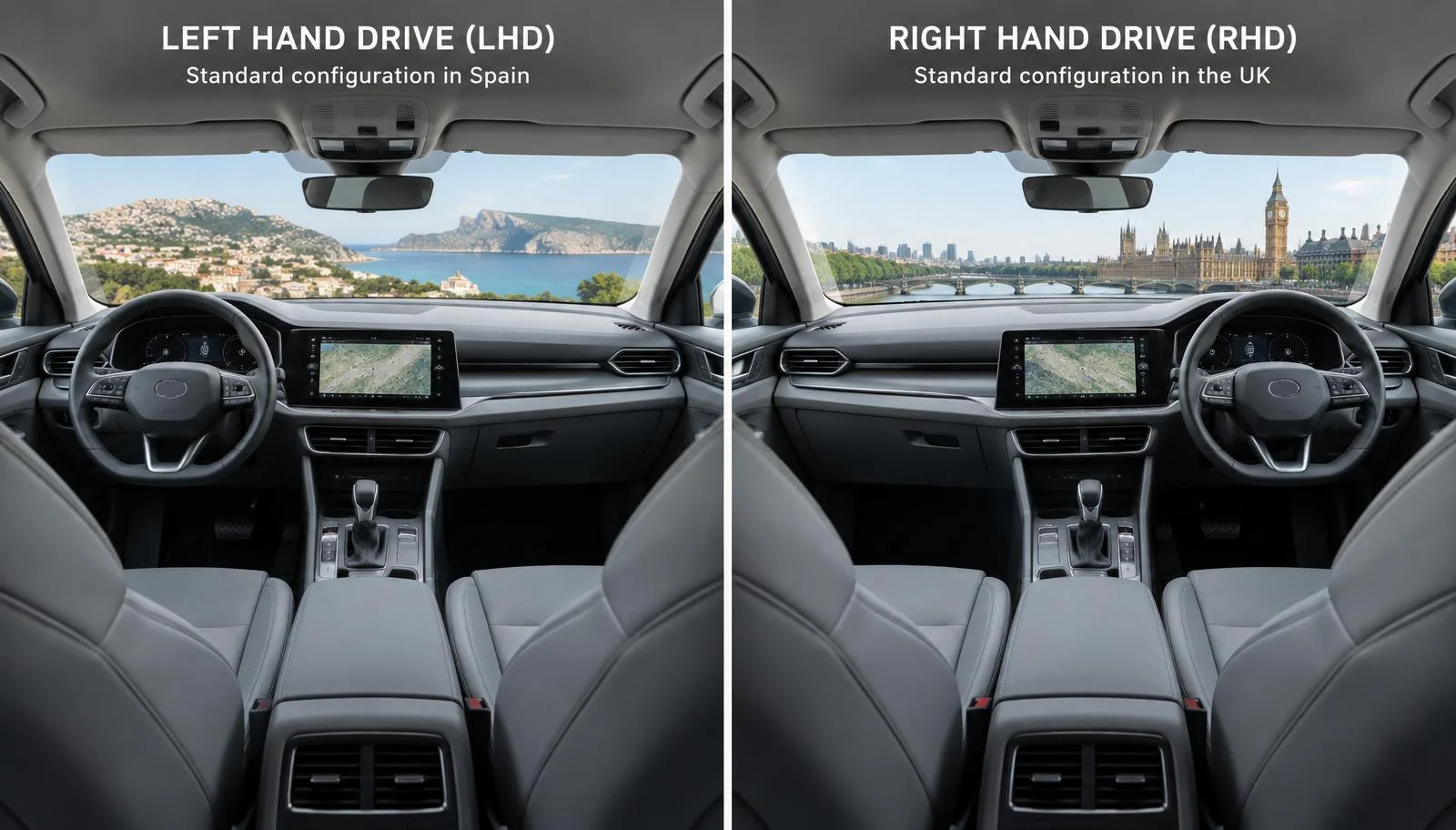
Left Hand Drive (LHD)
The steering wheel is positioned on the left side of the vehicle.
This is the standard configuration for cars driven in Spain and most of mainland Europe, where traffic drives on the right.
Right Hand Drive (RHD)
The steering wheel is positioned on the right side of the vehicle.
This is the standard configuration in the United Kingdom, where traffic drives on the left.
Both types of vehicle can be used in Spain when they meet the applicable registration, inspection and roadworthiness requirements. However, their resale markets are very different.
Why Is My RHD Car Worth Less Than an Equivalent LHD Car?
This is one of the most common questions we receive from British customers.
The answer is mainly down to market demand.
1. A Much Smaller Buyer Market
Most Spanish drivers prefer left hand drive vehicles because they are designed for driving on Spanish roads.
This means that a left hand drive vehicle can appeal to a much wider range of potential buyers.
Right hand drive cars tend to attract a smaller audience, particularly British expats, enthusiasts and buyers specifically looking for an RHD vehicle.
A smaller buyer market generally means lower resale prices.
2. Overtaking Can Be More Difficult
Spain drives on the right hand side of the road.
In a right hand drive car, the driver sits closer to the roadside rather than the centre of the road.
This can make it harder to see around vehicles ahead when considering an overtake on a conventional two-way road.
Drivers must take additional care and should never attempt an overtake without sufficient visibility.
3. Car Parks and Toll Booths Can Be Less Convenient
Many ticket machines, car park barriers and toll facilities in Spain are designed with left hand drive vehicles in mind.
In an RHD vehicle, the driver may find that the ticket machine is on the passenger side.
This can make everyday driving slightly less convenient, particularly when travelling alone.
4. Spanish Buyers Usually Prefer LHD
Most Spanish buyers naturally look for left hand drive vehicles.
Even if an RHD car is mechanically excellent, has low mileage and a full service history, its steering wheel position can limit demand.
This is especially noticeable with ordinary family cars, SUVs and everyday vehicles.
5. RHD Cars Can Take Longer to Sell
Because fewer buyers are searching for right hand drive cars, these vehicles can remain advertised for longer.
For professional car dealers, a longer selling period creates additional costs, including advertising, storage, preparation and tied-up capital.
These factors can influence the price a dealer is able to offer.
6. UK Market Prices Influence Buyer Expectations
Many British customers in Spain are familiar with UK used car prices.
Because UK vehicles are generally right hand drive, buyers may compare Spanish registered RHD vehicles with similar cars advertised in Britain.
This can influence the price buyers are prepared to pay, although Spanish registration and other factors may justify a premium over an equivalent UK registered vehicle.
An RHD car isn't necessarily a worse car. It simply appeals to a smaller market in Spain.
How Much Less Is an RHD Car Worth in Spain?
There is no universal percentage difference. The price gap depends on the make, model, age, mileage, condition, registration status and demand.
| Factor | Left Hand Drive | Right Hand Drive |
|---|---|---|
| Spanish buyer demand | Generally higher | Generally lower |
| Potential buyer market | Broad | More specialised |
| Typical resale value | Often higher | Often discounted |
| Average selling difficulty | Usually easier | Can take longer |
| Driving convenience in Spain | Designed for local roads | Some inconveniences |
| Dealer purchase offers | Often stronger | Reflect smaller buyer market |
| UK buyer familiarity | Less familiar | More familiar |
Why Are Used Cars So Expensive in Spain?
Many British expats are surprised by the prices of second-hand vehicles in Spain.
It's not unusual to see older cars advertised for considerably more than equivalent vehicles in the UK.
There are several reasons for this.
1. Different Supply and Demand
The UK has a large used car market with substantial volumes of vehicles entering the second-hand market.
Spain has different supply conditions and consumer demand, which can support higher prices for certain types of used vehicles.
2. Spanish Cars Often Stay on the Road for Longer
Older vehicles are common on Spanish roads.
Many buyers are happy to purchase an older car if it is mechanically sound, properly maintained and suitable for their needs.
This can help sustain demand for affordable older vehicles.
3. Climate and Vehicle Condition
In many parts of Spain, particularly the Mediterranean coast, vehicles may experience less exposure to road salt than cars used in parts of the UK.
This can help reduce certain types of corrosion.
However, the Spanish climate can also cause sun damage, faded paintwork, deteriorated plastics and worn interior materials.
Condition must always be assessed individually.
4. Registration and Importation Costs
Importing and registering a vehicle in Spain can involve transport, taxes, inspections, technical documentation and administrative expenses.
These costs can make importing an apparently cheap vehicle from another country less attractive.
They can also influence the prices of vehicles already registered in Spain.
5. Taxes and Dealer Costs
Professional vehicle sellers must account for business expenses, vehicle preparation, applicable taxes, consumer protection obligations and other operating costs.
The price advertised by a dealer is therefore not the amount the dealer originally paid for the vehicle.
6. The Difference Between Advertised Prices and Actual Selling Prices
A car advertised online for €8,000 has not necessarily sold for €8,000.
Advertised prices are asking prices, not confirmed transaction prices.
Some vehicles may remain online for weeks or months before selling, while others may be discounted or negotiated.
This is an important distinction when estimating the real market value of a vehicle.
A vehicle's value is ultimately determined by what buyers are prepared to pay, not simply what similar vehicles are advertised for online.
Why Can’t a Car Buying Company Pay the Full Advertised Price?
We understand that some customers look at similar vehicles advertised online and wonder why a professional buyer cannot offer the same amount.
The important distinction is between retail selling price and trade purchase value.
When a professional company purchases a vehicle, it may need to account for:
- Vehicle collection and transport.
- Ownership transfer administration.
- Mechanical inspections.
- Servicing and maintenance.
- Repairs and cosmetic preparation.
- Professional advertising.
- Storage and business operating costs.
- Applicable taxes.
- Consumer warranty and legal obligations when reselling.
- The possibility of the vehicle taking months to sell.
- The risk of unexpected mechanical problems.
- A reasonable business profit.
For right hand drive vehicles, the smaller potential buyer market can increase the risk of holding the vehicle for longer.
Example:
A vehicle advertised for €5,000 does not mean a professional buyer can pay €5,000 for it.
The dealer must consider the likely final selling price, preparation expenses, business costs, potential liabilities and the risk involved.
This is why trade offers are generally lower than advertised retail prices.
At We Buy Your Spanish Car, we aim to provide realistic offers based on the vehicle's condition and actual market demand.
We believe in explaining our valuations rather than simply giving customers a number without context.
Does Having Spanish Registration Increase the Value of an RHD Car?
In many cases, Spanish registration can make an RHD vehicle more attractive to buyers who intend to keep and use the car in Spain.
A Spanish registered vehicle has already completed the relevant registration process, potentially saving the next owner the expense and administration of importing and registering a foreign vehicle.
However, Spanish registration does not automatically make an RHD car worth the same as an equivalent LHD model.
The vehicle still appeals to a smaller buyer market.
Its actual value will depend on condition, mileage, service history, ITV status and demand.
Yes, We Buy Right Hand Drive Cars!
At We Buy Your Spanish Car, we regularly purchase right hand drive vehicles.
We understand that selling an RHD car privately in Spain can sometimes be frustrating.
You may receive fewer enquiries, unrealistic offers or messages from buyers who are unfamiliar with the RHD market.
Our aim is to provide a straightforward alternative.
We can consider a wide range of RHD vehicles, including:
- Hatchbacks
- Family cars
- SUVs
- Estate cars
- Convertibles
- Older vehicles
- High mileage vehicles
- Vehicles with cosmetic imperfections
Every vehicle is assessed individually.
Whether your car is in excellent condition or requires some attention, you're welcome to request a free valuation.
Frequently Asked Questions
We Understand the Right Hand Drive Market
Selling an RHD vehicle in Spain requires an understanding of a more specialised market.
At We Buy Your Spanish Car, we have experience buying and selling right hand drive vehicles and understand the factors affecting their values.
- We Buy Both RHD and LHD Vehicles
- Whether your steering wheel is on the left or right, we're happy to consider your vehicle.
- Realistic Market Valuations
- Our offers take into account condition, mileage, demand and the actual resale market.
- Experience With British Expats
- We regularly assist British customers living in Spain or returning to the UK.
- Prompt Ownership Transfer Arrangements
- We arrange our vehicle name transfers immediately as part of the purchase process.
- Proof of Completed Ownership Transfer
- We provide documentary confirmation once the official transfer has been completed.
- Bank Transfer Payments
- Payments are arranged by bank transfer, with the details agreed before completing the sale.
- Straightforward Communication
- We explain the process clearly and answer questions without unnecessary complications.
Thinking of Selling Your Right Hand Drive Car?
Don't let the smaller RHD market make selling your vehicle more complicated than it needs to be.
Get a free, no obligation valuation. We handle the necessary paperwork and provide proof once the ownership transfer is complete.
Whether you're upgrading, moving back to the UK or simply no longer need your vehicle, we're here to help.
Right hand drive or left hand drive, we're interested in your car.